I paid my own way to Goa. Not on principle — if someone offers me a press trip or a free room I'll take it. You'll just see it said at the top of the piece, the way it should be. Nobody has offered yet. It was a private holiday, not a work trip — these are only the things I keep telling people since I got back.
Not many countries make me nervous. India did. I'd let a handful of rude encounters elsewhere, and how angry the argument gets online, stand in for a place I'd never been to — my problem, not India's. Goa took about a day to make me feel stupid about it. I've not been anywhere warmer.
The dogs and the cows
The local dogs are amazing. Every beach, every café, there's a dog who has decided you're temporarily family — fed, sunned, completely unbothered.

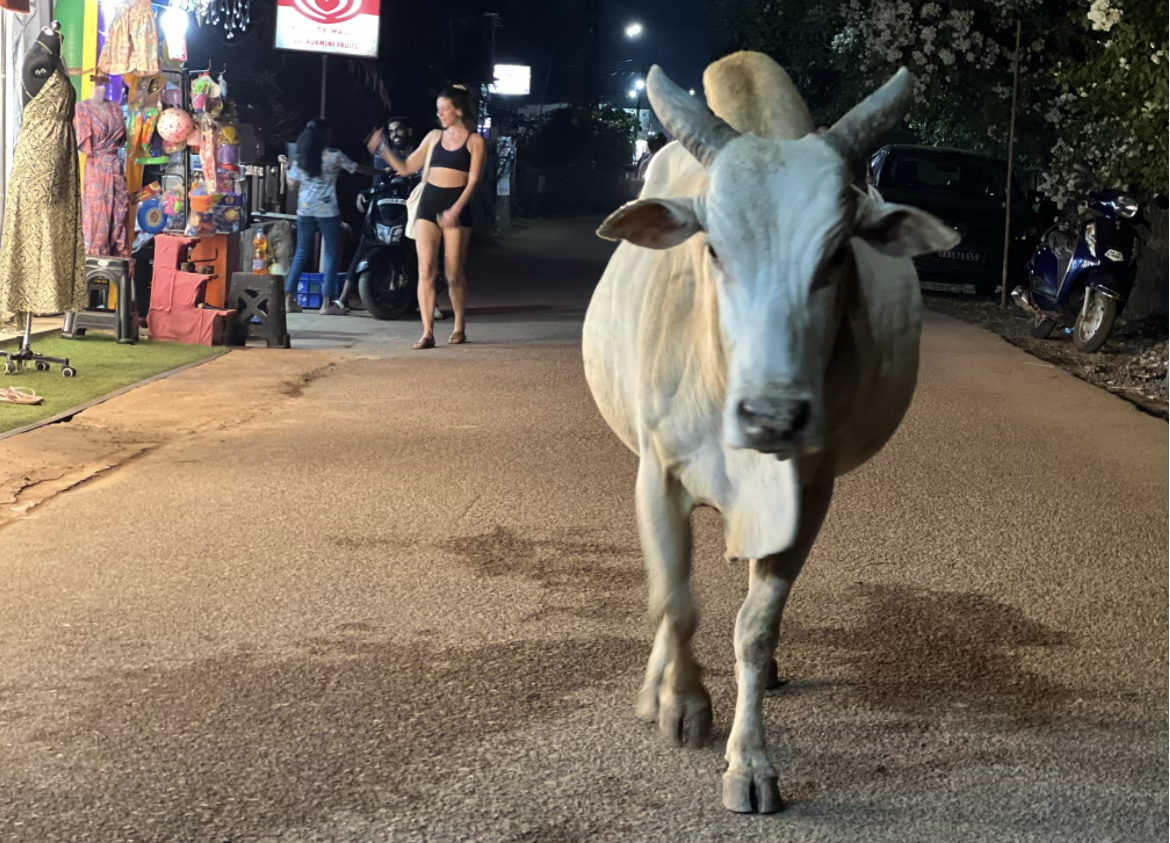
And the cows wandering amongst the tourists are fascinating: a full-grown white cow strolling a lit-up shopping street at night, weaving through scooters and shoppers, and nobody blinks. It rearranges your sense of who a street is for, in a way no travel brochure manages.
The food
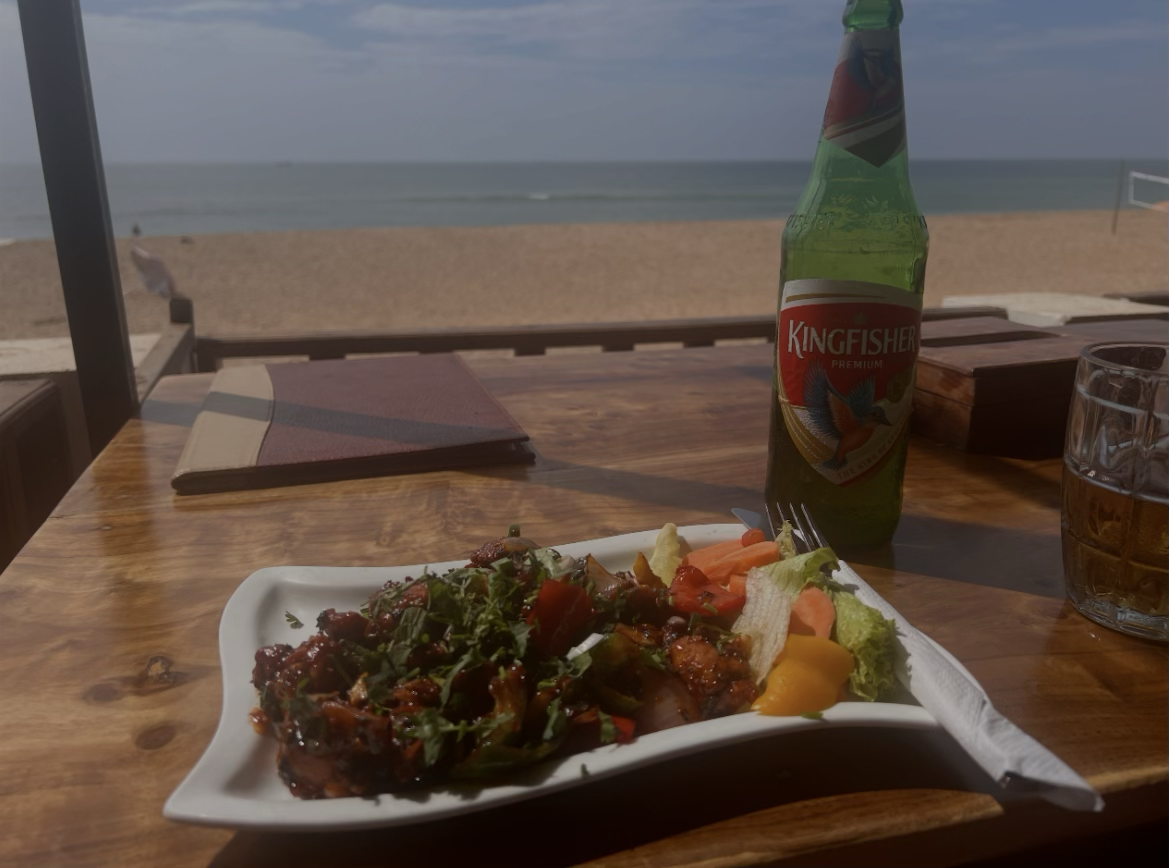
The food is amazing. Chilli chicken and a cold Kingfisher at a table where the sand starts — some of the best meals I had cost less than a London pint. I won't pretend that isn't part of why you go.
The lights
Now the honest bit. The amount of LED light up north is ridiculous. Shacks and shopfronts ringed in rope-light, everything blazing at full white, all night.
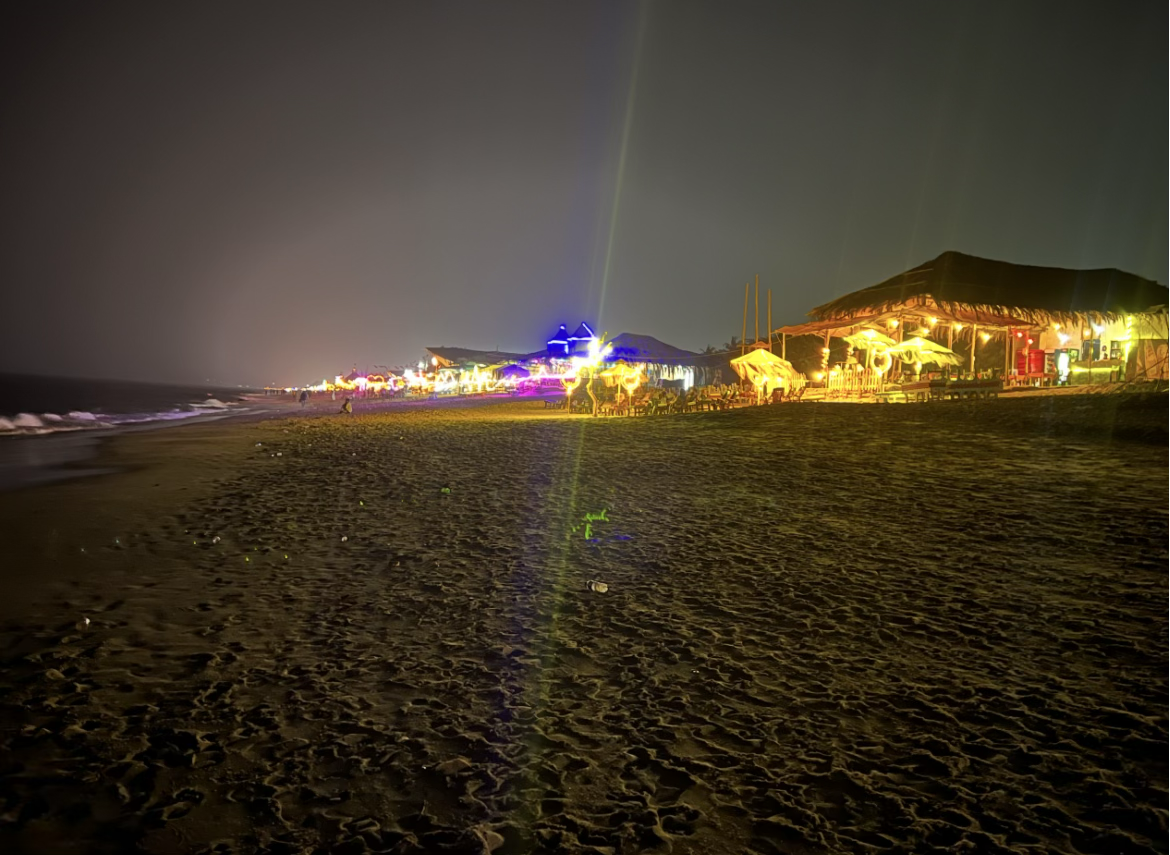
And here's the thing — Goa knows this. Agonda, down south, is one of the state's four protected olive ridley turtle nesting beaches — a record 181 nestings in 2024 — and the coastal authority's own rules require beach shacks there to dim, shield or redden their lights in season, because bright light turns nesting turtles away and sends hatchlings crawling the wrong direction. The dark beach isn't just nicer. It's the rule, where anyone enforces it.
The power cuts made the point better than I can. When the electricity goes — and it goes — the coast looks the way it used to, and the way it honestly should: dark sand, stars, candles on tables. Ten minutes later the LEDs snap back on and you realise what's been stolen from the view.
The rubbish, and a suggestion
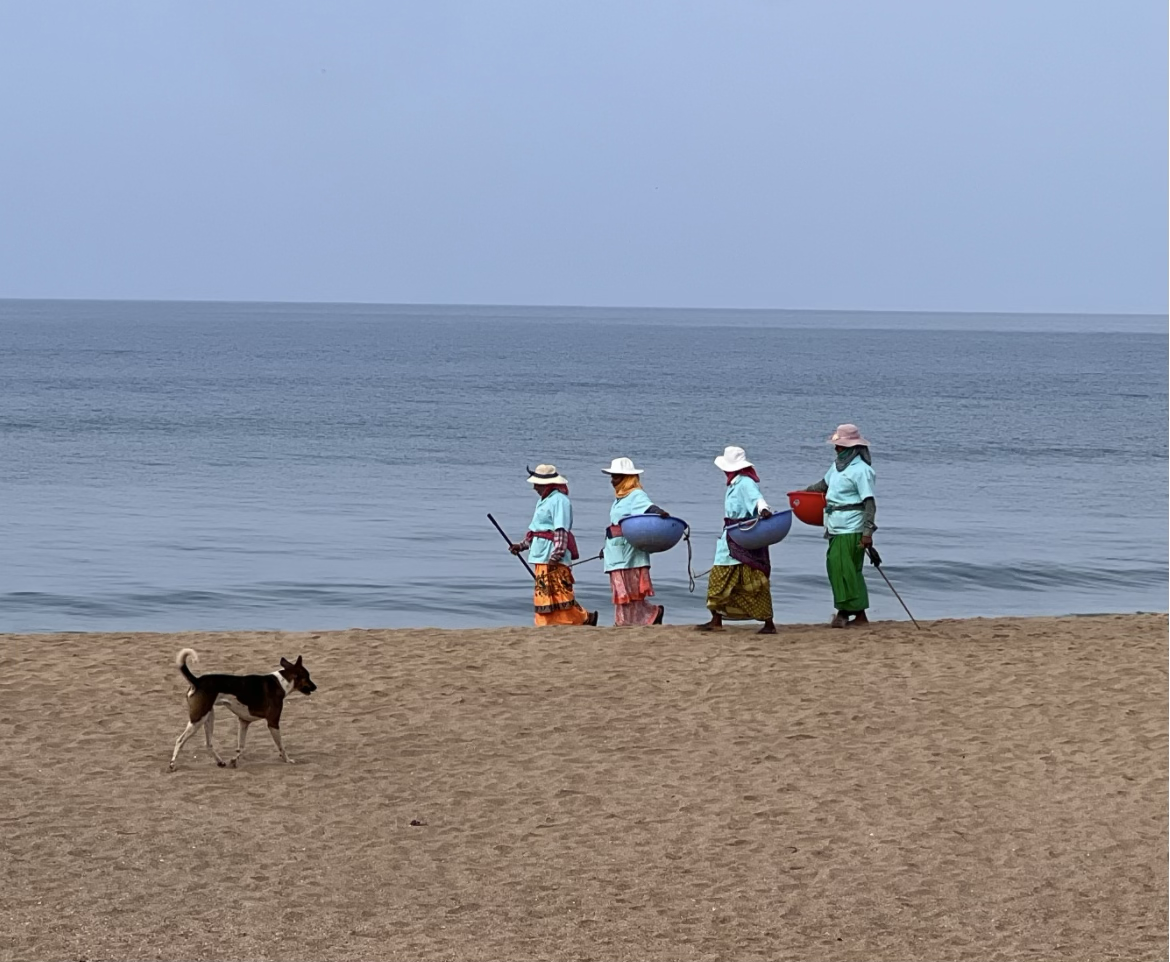
Goa employs a lot of people collecting rubbish. I watched teams working the tideline with baskets, every morning. But it's a forever job — the litter arrives as fast as it's carried away, because every new shack, stall and bar adds to the pile while the collection stays the same.
My honest view, as a visitor who loves the place: stop approving new openings until the clean-up in front of the existing ones is actually working. Tourism is Goa's engine and nobody sensible wants it switched off — but the beach is the product. Selling more of it while it degrades is the one deal that can't last.
Worth it?
Completely. Go for the dogs, the cows, the food, and the ten dark minutes when the power cuts out. And if you're booking the south in nesting season — pick the shack with the red lights. They're the ones doing it right.
Nick, founder